
Food and Craft Route in Lesvos
A multi-day route through markets, olive-oil heritage, pottery, woodcraft, cheese and the island’s distilling tradition.
Lesvos food and craft traditions are distributed across the island, so this route should never be forced into one day. Use Mytilini for markets and urban food, Agia Paraskevi for olive-oil production, Agiasos and Mantamados for craft villages, and Plomari for distilling and soap-era industrial history. Workshops and museums are working or seasonally operated places; check whether visits are possible and buy directly only when the maker welcomes visitors.
Best base
Split the route between Mytilini and a central or northern base.
Time
Three days; individual sections work as separate day trips.
Best for
Local products, workshops, industrial heritage, markets, responsible tasting and conversations with makers.
A route with real stops
The order below is designed to reduce backtracking and to leave enough time for walking, conversation and a proper meal. Opening, access, road and weather conditions can change, so verify the stops that matter most shortly before the visit.
1. Mytilini market and food streets
Walk Ermou and nearby streets early enough to see the commercial city in motion. Look for olive products, cheese, fish, herbs and sweets, then choose a small set of things to taste rather than buying fragile food at the beginning of a hot day. Ask permission before photographing people or stalls.
2. Agia Paraskevi olive-oil museum
The former communal press explains the machinery and social organisation behind one of the island’s defining products. Follow the production sequence, notice soap and by-products, and use the museum to make later olive-grove and food stops more meaningful. Verify opening information before travelling.
3. Agiasos craft traditions
Walk the centre for pottery, carved wood and village sweets. Distinguish genuinely local work from generic souvenirs by asking where and how an object was made. A workshop conversation is more valuable than trying to visit every shop in a single hour.
4. Mantamados pottery and dairy
Mantamados combines pottery traditions with northern Lesvos cheese and village food. Pair Taxiarchis with time in the settlement and look for producers or workshops that are clearly open to the public. Do not arrive unannounced at private production spaces.
5. Plomari distilling and industrial heritage
Choose one distillery museum or visitor experience and confirm its current arrangements. Continue through the harbour and Sedountas townscape to understand why distilling, shipping and soap production developed here. Any tasting requires a non-drinking driver or a local overnight stay.
Choose the pace that fits
Focused version
Use separate days for Mytilini, central olive-and-craft heritage, and Plomari. If time is limited, choose the theme you care about most rather than turning producers into a checklist.
Slower version
Add a fourth day for Mesotopos village food traditions or a second craft village, provided you have confirmed a meaningful public visit. Keep transport practical and purchases protected from heat.
What to eat and look for
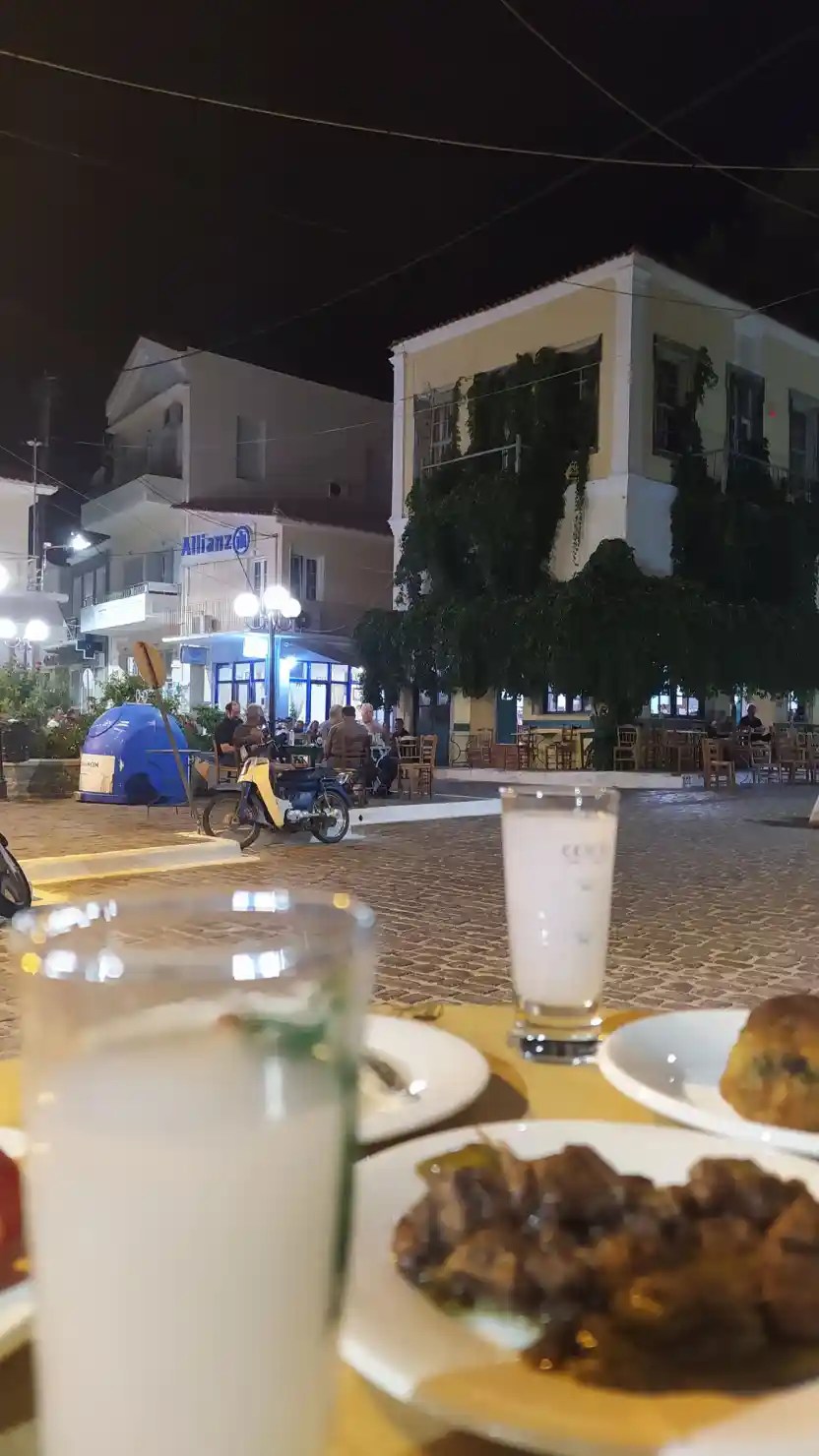
Build meals around place: urban meze in Mytilini, oil and vegetable dishes in the central villages, cheese in the north and seafood with responsible ouzo tasting in Plomari. Ask what is seasonal and locally produced; named business hours can change.
Practical notes
- Contact museums, workshops and distillery visitor centres before travelling.
- Never drink and drive; arrange a driver, taxi or overnight stay for tastings.
- Carry a cool bag for cheese and other perishable purchases.
- Ask before entering workshops or photographing production.

Where to stay
Compare accommodation only after choosing the most practical base for the route; changing base can save hours of driving on this large island.
